
Over the last few years, delivery speed has become one of the loudest talking points in India's D2C and retail story. Ten-minute delivery has moved from novelty to expectation in some categories, and from competitive advantage to default promise in others. But behind the headlines and marketing claims, a bigger conversation is playing out inside businesses, around cost, reliability, sustainability, and whether speed is always serving the customer or the business.
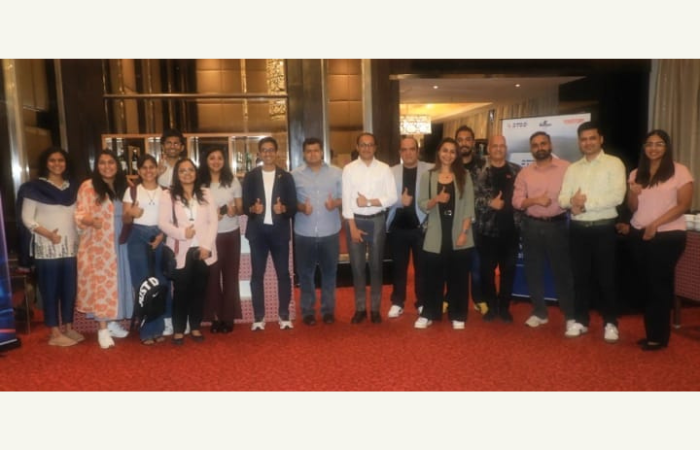
To explore these questions, YourStory and DTDC convened a closed-door roundtable in Mumbai titled ‘Fast, not frantic: Rethinking delivery for modern D2C and retail’. Moderated by Madanmohan Rao, Research Director at YourStory, and hosted by Abhishek Chakraborty, CEO of DTDC, the session brought together D2C founders and executives for a candid discussion about what's really happening on the ground.
In the room were leaders from consumer brands across fashion, beauty, wellness, and sustainable commerce, including Ruchi Jain (Taru Naturals), Sahil Rajani (Noora International), Shikhar Vaidya (ReDesyn), Chaitsi Ahuja (Brown Living), Krithika Sriram (Plix), Soumya Kalluri (dwij), and Ketan Jain (RENÉE Cosmetics).
What followed was a candid assessment of where delivery promises stop adding value, and start becoming a liability.
When speed stops helping
Across categories, there was broad agreement that most customers don’t need everything delivered in minutes. What they do need is reliability.
Participants noted that customers are willing to wait longer if delivery timelines are clear and consistently met. The bigger source of dissatisfaction is missed promises, lack of visibility, and the uncertainty that follows once an order leaves the warehouse.
This gap is particularly visible in D2C. Marketplaces have trained customers to expect predictable ETAs and regular updates. Many independent brands, despite owning the customer relationship, struggle to offer the same assurance, often pushing customers back to aggregators even when margins there are thinner.
The real cost shows up later
Founders agreed that logistics costs rarely feel urgent in the early stages. They become visible only after scale.
Cash-on-delivery reconciliation issues, return-to-origin losses, damaged inventory, theft, and dispute resolution quietly accumulate. By the time these issues surface clearly in the P&L, they’re already embedded in daily operations.
Several brands spoke about having to revisit expansion plans because logistics costs began to dictate decisions—where to ship, which SKUs to promote, and how aggressively to enter new markets. In some cases, fulfilment economics are now shaping product strategy itself.
Too much is still handled in-house
Another recurring theme was internal overload. As brands grow, logistics teams often end up managing functions that were never meant to be core – returns processing, COD reconciliation, inventory movement between cities, and constant coordination across multiple partners.
These responsibilities often stayed in-house not because they worked well, but because external options lacked transparency or predictability. The hesitation to outsource was rooted in the risk of losing control without gaining reliability.
Category realities being ignored
The discussion also highlighted how delivery conversations often flatten category differences.
For sustainable and lifestyle brands, speed is rarely the primary driver. Product safety, packaging integrity, and alignment with sustainability commitments matter more. In wellness and beauty, regulatory compliance, reverse logistics, and handling standards add layers of complexity that speed-first models struggle to address.
As a result, several brands are already tailoring delivery promises by category and geography, quietly moving away from one-size-fits-all SLAs.
A clear gap in the middle
As the conversation progressed, attention turned to what sits between hyperlocal delivery and traditional express shipping.
Many brands described a growing need for a middle layer—faster than standard shipping, but without the cost structure and fragility of instant delivery. Same-day or next-day fulfilment within cities, backed by predictable handoffs and better visibility, emerged as a practical sweet spot for a wide range of D2C use cases.
It was in this context that DTDC outlined how it is approaching this gap through Raftaar, its rapid commerce offering. Designed for categories that don’t require instant delivery but do need faster, dependable fulfilment, Raftaar is positioned as a mid-speed delivery layer that balances turnaround time with unit economics and operational control.
The emphasis, as discussed in the room, is not on competing with quick commerce, but on serving planned purchases, broader SKU mixes, and brands looking to scale beyond Tier I cities.
Key takeaways
The conversation surfaced a few clear patterns that are shaping how D2C leaders are thinking about logistics going forward.
- Speed is losing its blanket appeal. For most categories represented in the room, reliability and predictability are now stronger drivers of customer trust than extreme delivery timelines.
- Logistics costs don’t hurt early, but they hurt deeply later. Issues such as RTOs, COD reconciliation, inventory damage, and dispute resolution tend to compound quietly, surfacing only after scale has been achieved.
- Delivery models are becoming category-specific. Brands are moving away from uniform SLAs and instead designing fulfilment strategies based on product type, purchase intent, and geography.
- Operational overload is real. Many brands are still managing logistics functions internally not because they want to, but because external alternatives haven’t consistently delivered transparency or control.
- The “middle layer” is no longer theoretical. Same-day or next-day delivery models that sit between hyperlocal and traditional express are emerging as a practical requirement for planned purchases and broader SKU mixes.
- Delivery has become a strategic decision. What was once an execution detail is now influencing expansion plans, product design, and margin strategy.
Signals from the room
If there was one unspoken agreement in the room, it was that the next phase of D2C growth will reward brands that resist frantic speed in favor of deliberate design. Delivery is no longer about how fast a package moves but about how intelligently the system behind it is built.
Share:
Closing the Innovation–Capital Gap for Craft-Led Enterprises