

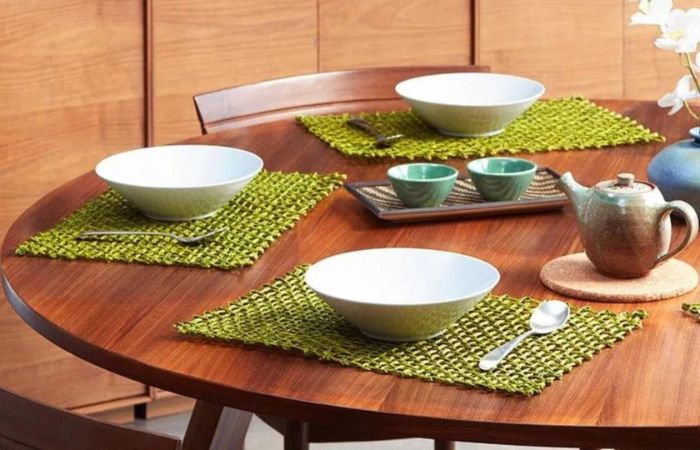
There is handmade decor, and then there is decor with a real story behind it.
Sabai grass sits firmly in the second category. It is a strong natural fibre traditionally used in eastern India to create rope-based utility and decor products. Government sources describe sabai grass handicraft as a craft made from collected, dried leaves that are turned into rope and woven into baskets, boxes, mats, trays, vase holders, and other functional pieces.
At Brown Living, that makes sabai grass more than a beautiful material choice. It is the kind of category that brings together natural texture, artisan skill, everyday usefulness, and a more mindful way of living. Brown Living’s current sabai grass collection includes pieces such as table mats, planters, baskets, jewellery boxes, and coasters, showing just how versatile this craft can be in the modern home.
What is sabai grass?
Sabai grass is commonly associated with Eulaliopsis binata, a fibrous grass valued for its strength and flexibility. The Government of India’s ODOP page notes that its thin, long fibrous leaves are used to produce sabai rope, which then becomes the base material for a wide range of utility and decorative items.
That strength is what gives sabai products their sweet spot: they look earthy and artisanal, but they are also practical enough for daily use. This is not fragile “look but don’t touch” decor. It is material-led design that can work hard in the home.
How sabai grass products are made
The beauty of sabai lies in how simple and skill-based the process is. The grass is harvested, dried, and prepared, then twisted into rope and shaped into products through hand techniques such as coiling, stitching, and weaving. Traditional outputs include baskets, mats, trays, boxes, and decor accents, but the craft has also evolved into more contemporary home and lifestyle products.
That visible handwork is part of the appeal. Sabai products carry warmth. They soften a space. They add tactile character in a way machine-made decor rarely can.
Why sabai grass matters from a sustainability perspective
A lot of products are casually marketed as sustainable. Sabai deserves a more precise explanation.
1. It is a plant-based alternative to more synthetic home products
At the material level, sabai is a natural fibre. That makes it relevant for consumers looking to reduce reliance on plastic-heavy or petrochemical-based decor and storage pieces. In categories such as baskets, organisers, coasters, table mats, and wall decor, sabai can be a more mindful material choice.
2. The grass is valued for resilience and land benefits
Research on Eulaliopsis binata describes it as a hardy perennial grass with wide adaptability and notes its role in soil and water conservation. It has been identified as useful for erosion control, especially on slopes, and studies have also reported beneficial effects on soil properties and microclimate.
That gives sabai a deeper environmental story than just “natural material.” The plant itself has ecological value.
3. It supports longer-use products, not disposable aesthetics
Sustainability is not just about biodegradability. It is also about durability and repeat use. Sabai’s natural strength makes it suitable for practical home categories, from storage and dining accessories to planters and organisers. The strongest sustainable products are often the ones that remain useful for years, not the ones bought for a two-week decor phase.
Why sabai grass matters from a social impact perspective
This is where the story gets even stronger.
1. It supports artisan livelihoods
Sabai craft is closely tied to rural artisan communities, especially in Odisha and West Bengal. The craft is not just about making decor; it is also about income generation through collecting, processing, rope-making, weaving, finishing, and selling. Government and development-sector sources consistently frame sabai as an important livelihood-linked craft.
2. Women artisans are central to the ecosystem
One of the most powerful parts of the sabai story is how women-led many of these enterprises are. AIACA reports a project in Baliapal, Balasore working with 100 women sabai grass artisans through skill upgradation, product development, market linkages, and welfare access. The same project says the artisans were collectivised into a cluster enterprise, developed around 70–75 products, and saw a 30% increase in sales over FY 2018–20.
Mission Shakti’s Odisha documentation reinforces this. It describes women artisans in Mayurbhanj as pioneers in sabai craft, notes that 63 self-help groups across the state are engaged in this livelihood activity, and says one producer group in Mayurbhanj generated around ₹62 lakh in annual turnover while supporting monthly income of roughly ₹10,000 per member. It also notes that Mayur Shilpa supports 350 sabai craft women artisans across the district.
3. It helps traditional craft stay commercially alive
The survival of a craft depends on relevance, not nostalgia alone. Sabai is a strong example of traditional skill evolving for modern markets. Mission Shakti notes that with design and skilling support, women producer groups have blended contemporary shapes, motifs, and textures into traditional sabai products for urban consumers.
That is exactly the kind of evolution craft needs: rooted in tradition, but designed for today’s homes.
Why sabai grass works so well in modern interiors
Sabai fits beautifully into the current design shift toward warmer, more tactile, less plastic-looking homes.
Natural-fibre decor adds softness to hard surfaces. It introduces texture without visual clutter. It works across multiple interior styles, whether your home leans minimal, earthy, bohemian, tropical, or quietly luxe. A sabai grass basket can make storage feel intentional. A sabai planter can make a plant corner look more finished. A sabai table mat or coaster can make everyday dining feel more grounded.
The material does not scream for attention. It just makes a space feel better.
Why sabai grass is a good fit for Brown Living
Brown Living is built around products that are better, cleaner, and more thoughtful. Sabai grass fits that positioning extremely well because it combines all the right things in one category:
- natural-fibre appeal
- artisan-made value
- practical use cases
- visual warmth
- gifting potential
- rooted Indian craft heritage
That combination matters. Customers want to choose both function and meaning. Sabai offers both.
Explore the sabai grass collection at Brown Living
Brown Living’s sabai grass collection already reflects the versatility of the craft. Current listings include handmade sabai grass table mats, planters, multipurpose baskets, jewellery boxes, and coasters from multiple sellers. That range makes the collection easy to merchandise across everyday utility, decor styling, and gifting.
Everyday utility
Think baskets, organisers, table mats, and coasters that make conscious living part of daily routines.
Decor with texture
Planters, boxes, and woven accents that add warmth without overwhelming a room.
Thoughtful gifting
Handcrafted pieces that feel more personal than mass-produced home accessories.
The honest sustainability take
Sabai grass has a compelling sustainability story, but the best storytelling is honest storytelling.
Not every sabai product is automatically perfect. Some may use added dyes, trims, or mixed materials. Packaging and shipping still matter. And the phrase “supports artisans” is strongest when sourcing relationships are fair and value reaches makers meaningfully.
So the most credible claim is this: sabai grass products can be a more mindful choice because they are rooted in a natural fibre tradition, support handmade production, and connect consumers to real artisan livelihoods and evolving craft ecosystems.
Final thoughts
Sabai grass is one of those rare materials that feels relevant on every level. It is beautiful without being fussy, useful without being boring, and traditional without feeling dated. It brings natural texture into the home, while also carrying a deeper story of craft, resilience, and rural livelihoods.
Explore the Made with Sabai Grass collection on Brown Living and discover handcrafted pieces that bring together natural texture, everyday function, and conscious living.
Share:
How to Maintain Your Eco-Friendly Travel Kit: Care and Cleaning Tips